Always playing with LEGO
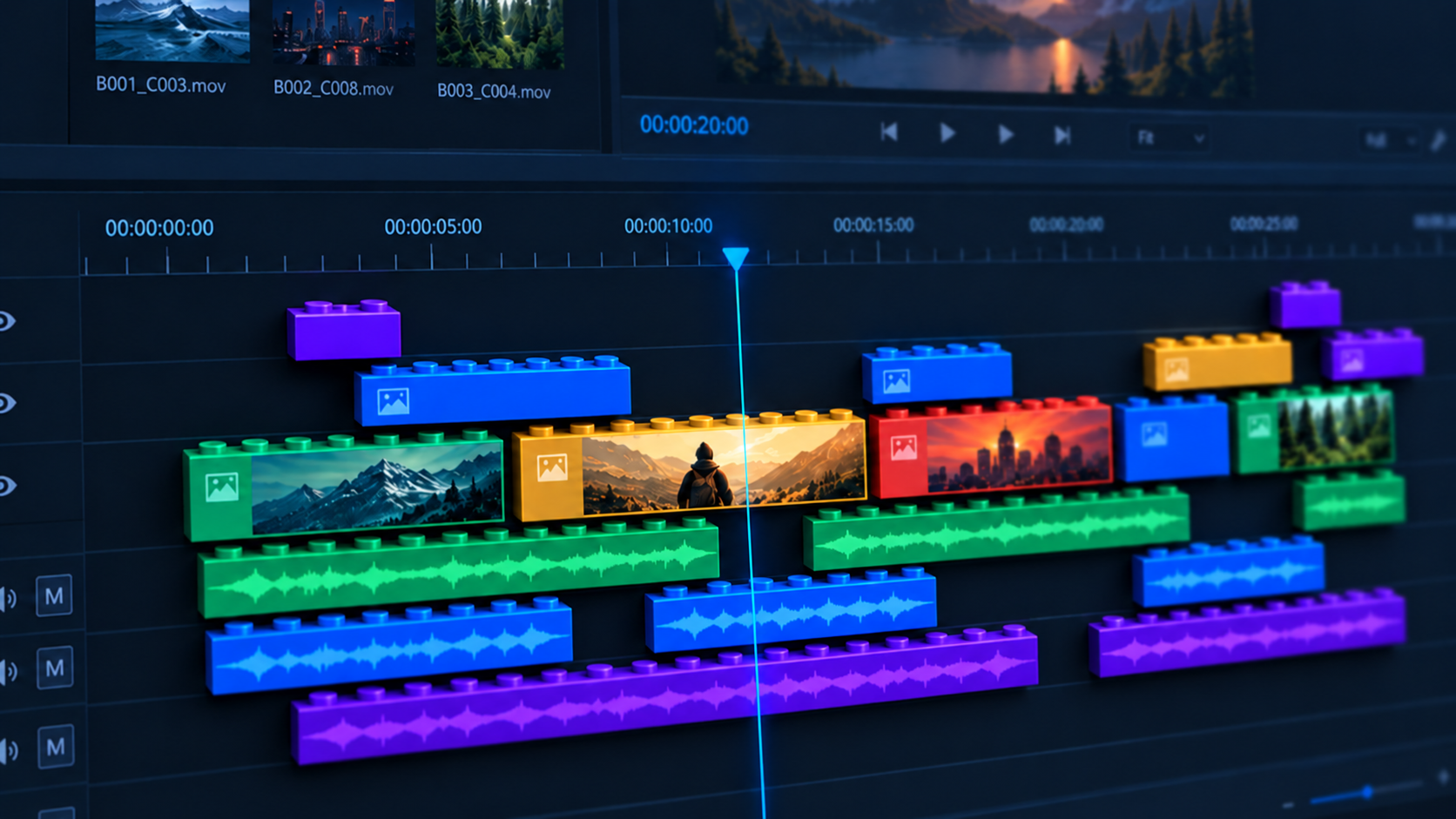
When I was a kid, I could spend entire evenings on the floor surrounded by LEGOs. I don't remember caring very much about the instructions or about reproducing whatever was printed on the instructions. What excited me were the pieces of different colours, shapes, wheels, little characters, parts from things I had built before and then destroyed again. I would look at all of it without knowing exactly what I was going to make. That was probably the best part. I could start with one brick, connect another, change my mind, separate something apart and build it differently. Slowly a house appeared, or a car, or some strange machine that only made sense to me. Then a story would begin around it and I could stay there for what felt like hours, completely absorbed in a world that did not exist before I started putting those pieces together.
I never imagined there could be a profession hidden somewhere inside that feeling. Growing up in a very small village in rural Portugal, with no more than twenty people around, film was something that came from somewhere else. The idea that there were people somewhere taking images apart and deciding how they should be put back together was completely outside my world. We had a family handy-cam, like many families did, and we would film holidays trips. Afterwards we connected the camera to the television and watched the tape from beginning to end, no edit, no effects, no music. That was video to me. Something happened, someone recorded it, and later you watched it linearly happen again. A memory recorded in its pure sense.
Years later, during my final year at university, that idea changed in a single afternoon. I was studying Marketing Management and I was around nineteen. For our final project we had to invent a product or service and create the entire marketing campaign around it. We wanted to do something ambitious, trying to impress professors and having fun with it, so we decided to make an advertising film. We wrote something resembling a script, planned the shots, found a location and discovered that someone in the group had a friend with a camera who also knew how to edit. The shoot itself was already exciting, but the moment that stayed with me happened a few days later, when we met again and he opened an editing program. I think it was Final Cut, although it may have been Premiere Pro. I honestly don't remember. What I remember is the timeline.
There were these little blocks of footage sitting there, and he started moving them. One clip went before another. A shot we had recorded much later suddenly moved to an earlier part of the video. Music arrived underneath it. Two moments that had never happened together suddenly belonged together on screen. I watched him move those blocks backwards and forwards and I was fascinated. Until then, I had never really thought about how video was constructed. Of course I knew films were edited, but knowing something exists and seeing the mechanism in front of you are two very different things. Suddenly I understood that time could be rearranged. The meaning of one image could change because of the image beside it. The collection of footage was somehow becoming a film. It felt like someone had shown me the trick behind a magic act and instead of destroying the illusion, it made the magic even stronger. I was curious. Somewhere during that afternoon I made a quiet decision to myself. I need to learn how to do this.
A few months later university ended and life continued in the direction it was supposed to continue. I had studied Marketing, so I started an internship in the marketing department of a bank. It was sensible, but in the evenings I had already started moving in another direction. I enrolled in an editing course and spent almost a year learning non-linear (Avid / Premiere / Final Cut) and linear editing (Tape-Based Hardware) and the basic principles of cinema. Everything was new and exciting. I would leave the bank and enter another world where young creatives came together. One path looked safe and clear, the other had no destination at all, but every evening I became a little more certain about which one I wanted to follow.
I did not dramatically quit everything the next morning and become a filmmaker. Life rarely works like that. It took another three or four years of travelling, working and saving money before I moved to Slovenia, bought my Canon 7D and finally had enough material to edit regularly. Nobody was waiting for me anywhere. I knew nobody in cinema or television, so I started with what was close. Friends organised concerts, parties and festivals, and I brought the camera. Real events and real people became my way into editing. I didn't need a production company or permission from an industry I didn't know, just something happening in front of me and enough curiosity to film it.
Somewhere during those years, something else changed. I stopped being interested only in cutting images together and became interested in the stories and memories of the people I was filming. I think I was rediscovering documentary filmmaking without really knowing it yet. Those blocks on the timeline now carried real faces, voices and moments, and by choosing what to keep I could help give those stories shape. At the same time Facebook was becoming part of everyday life and YouTube was opening video to a generation that no longer needed television to be seen. Today that feels completely normal. Back then it felt like the walls around traditional video production were disappearing.
Eventually I returned to Portugal to do a Master's in Multimedia focused on Culture. I had already filmed concerts, events and live performances, but I wanted to understand more than the tools and Film Documentary theory. One project that stayed with me was a documentary called More Than Just a Card Game. Every day on my way to the subway I walk by older people sitting together, talking and playing cards in a park. The more I watched them, the more I realised there was a story hidden in those conversations, jokes and habits. Something deeper was happening around those tables, the simple pleasure of being together, passing the time and pushing loneliness a little further away. It was one of the first times I looked at something completely ordinary and saw a story reveal itself.
During my Master's, my work also became more experimental. I started creating interactive installations and audiovisual performances, and eventually helped start Openfield, a collaborative studio in Porto. For a while my world was full of projections, sound, code, sensors and ideas that didn't fit inside a single job description. It reminded me of the freedom I had felt as a kid, new pieces everywhere and nobody telling me exactly what I was supposed to build. I realised I didn't only love video. I loved its intersection with technology, art and people.
About a year later, I left Portugal and eventually found myself in The Netherlands. At first I volunteered at a music and cultural venue, filming live concerts and editing after-movies. And after that year something important finally changed. I had the opportunity to become an editor professionally, not someone trying to become one, not someone doing it around another job, but an editor who woke up every morning knowing that editing was the work waiting for him. I was thriving. I joined a growing media company full of young people producing an enormous amount of content for YouTube, the web and social media, and suddenly repetition became my teacher. We worked fast. Sometimes I was almost making one film per day. Footage arrived, there was a deadline, and before that deadline I had to select the material, find the structure, edit, work on the sound, grade, solve whatever technical problem appeared and deliver. Then another project arrived.
I did that again and again for five years. Editing every day slowly replaced the romantic idea of the craft with something deeper. Deadlines taught me not to wait for inspiration, repetition taught me to trust my instincts, and mistakes taught me what not to repeat. During those years I worked on everything from short social films and news to documentaries and long form projects for television, eventually growing into a team lead role and helping other editors and freelancers do the same. Somewhere inside those thousands of hours, the amateur part of my life quietly ended. I started seeing myself as a professional editor, and I was loving it.
Then life made a strange circle and brought me back to advertising. Years earlier, advertising had accidentally introduced me to editing during that university project. Now, I was returning to it from the other side, no longer as the Marketeer watching someone else editing, but as a Film Post Producer responsible for what happened around those edits, for budgeting, assigning teams and for building workflows step by step. It was a very different type of learning. I had spent years looking closely at the edit itself, and suddenly I had to look at the entire post process. Editors, Colourists, VFX artists, Sound Designers, Motion Designers, clients, producers, the schedules, internal and external feedback, and hundreds of deliveries all had to move together without losing the film somewhere in between. At first, it felt like I had stepped away from the thing I loved, but over time I understood that my relationship with editing was simply expanding. I was learning about all the invisible connections that allow post production to work.
Two years later Online Editing became a natural place to bring those worlds together. By then I understood the craft of editing, but I also understood production, communication and the technical journey of a project through post. Conforming between departments, coordinating what came back from Colour, Sound, VFX or Animation, checking versions, doing QC, mastering, delivering different formats and reformats, all of it used the same part of me that had always enjoyed putting pieces together, only now there were far more pieces. I still loved the cut, but I had also fallen in love with the larger system around it, and especially with the people who make that system work.
Sometimes when I look backwards, the journey feels much more random than it did while I was living it. Growing up in rural Portugal, I could never have imagined working on films seen around the world, documentaries shown on television, festival projects or international productions. What surprises me most is that there was never a visible path connecting that kid playing with LEGO to this life. There was only the next step. A university project. An evening course. A camera. Friends who trusted me to film their events. A move to another country. A first editing job. Thousands of deadlines. Some decisions were intentional, others happened because I simply said, “yes, why not”, and a few probably looked like mistakes while they were happening.
Twenty years after that first timeline, I still don't know exactly what comes next. The tools are changing faster than ever, AI is entering film production and the role of an editor will keep evolving with them. But I'm much less worried about seeing the entire road now. Most of the important turns in my life were impossible to see from far away. Usually there was only enough light to see the next step, and somehow that was enough.
I still feel eager to craft stories. To tell stories of real people. And I will probably keep doing commercial films too, because every project has something to teach if I pay attention, or are simply there to pay the bills, that's important too. And somewhere underneath all of this, perhaps very little has changed.
It took me years to realise I never really stopped playing with LEGO bricks. They just moved from the floor of my parents house to a timeline.