Over the years, I’ve realised that the biggest challenges in post-production rarely come from editing itself. They come from keeping track of hundreds of assets, versions, reviews and deliverables. That’s why project tracking has become one of the most important parts of my workflow. It gives me peace of mind, keeps everyone informed, and helps projects move forward with confidence.
New deliverables are requested, VFX shots arrive, colour corrected shots are requested, sound mixes are updated, client feedback comes in from multiple people, graphics change, exports need approval, and suddenly dozens of assets need to stay connected.
The difference between a smooth delivery and a stressful final week is often not editing speed. It’s organisation.
Why tracking matters in post-production
Modern post-production is built around constantly changing assets. A single commercial, documentary or branded film may include: Multiple edit versions; Proxy and camera originals; Motion Graphics files;
VFX shots; Music and sound effects; Voice-over revisions; Colour grading exports; Subtitle files; Delivery masters for different platforms...
VFX shots; Music and sound effects; Voice-over revisions; Colour grading exports; Subtitle files; Delivery masters for different platforms...
Each of these evolves independently throughout production, and without a clear tracking system, it’s surprisingly easy to make mistakes: Export the wrong timeline; Use an outdated VFX shot; Grade an old edit or used the wrong graded version; Deliver incorrect subtitles; Miss client feedback; Forget which version was approved; Lose time searching through folders and emails...
Most post-production delays are not caused by editing, they’re caused by information becoming disconnected. In most of the cases Post-production is a workflow problem.
Editors naturally think in timelines. Post-producers think in workflows. A successful project depends on knowing the current state of every moving part.
Editors naturally think in timelines. Post-producers think in workflows. A successful project depends on knowing the current state of every moving part.
Every production is different, but most projects benefit from tracking the same core information.
Assets
Maintain a single source of truth for:
• Camera media
• Audio
• Graphics
• Music
• Voice-Over
• VFX
• Subtitles
• Masters
• Camera media
• Audio
• Graphics
• Music
• Voice-Over
• VFX
• Subtitles
• Masters
Knowing where assets live and who owns them prevents duplicated work and missing files.
Edit versions
Version control becomes increasingly important as feedback grows. Track:
• Version numbers
• Delivery dates
• Client approvals
• Review links
• Feedback Notes
• Current status
• Version numbers
• Delivery dates
• Client approvals
• Review links
• Feedback Notes
• Current status
Simple version naming conventions alone can save hours over the course of a project.
Timelines
Large productions often contain multiple timelines:
• Offline edit
• Online edit
• Social versions \ Cutdowns
• Language versions
• Broadcast masters
• Web formats
• Offline edit
• Online edit
• Social versions \ Cutdowns
• Language versions
• Broadcast masters
• Web formats
Each should have a clear status and revision history.
VFX shots
Visual effects require dedicated tracking. A good shot tracker usually records:
• Shot ID
• Work needed
• Artist
• Current Status
• Media location
• Priority
• Version
• Delivery date
• Client approval
• Notes
• Shot ID
• Work needed
• Artist
• Current Status
• Media location
• Priority
• Version
• Delivery date
• Client approval
• Notes
This avoids constant email searches and helps everyone understand what remains before picture lock.
Client feedback
Feedback often arrives through:
• Frame.io
• Email
• WhatsApp
• Slack
• Teams
• Meetings
• Frame.io
• Slack
• Teams
• Meetings
Centralising comments into a single task list dramatically reduces mistakes.
The hidden cost of poor tracking
The biggest cost isn’t technical. It’s cognitive. Editors and post-producers should spend their attention solving creative problems—not trying to remember:
“Which export did we send yesterday?” “Was VFX v07 or v08 approved?” “Has audio received the latest XML?”
Every unanswered question interrupts creative work. Good tracking systems remove those interruptions.
Tracking scales with every project
On a two-day edit, a spreadsheet may seem unnecessary. On a documentary with six months of editing, hundreds of assets and multiple collaborators, it becomes essential.
As productions grow, organisation becomes one of the highest-return investments in post-production.
A practical tracking system
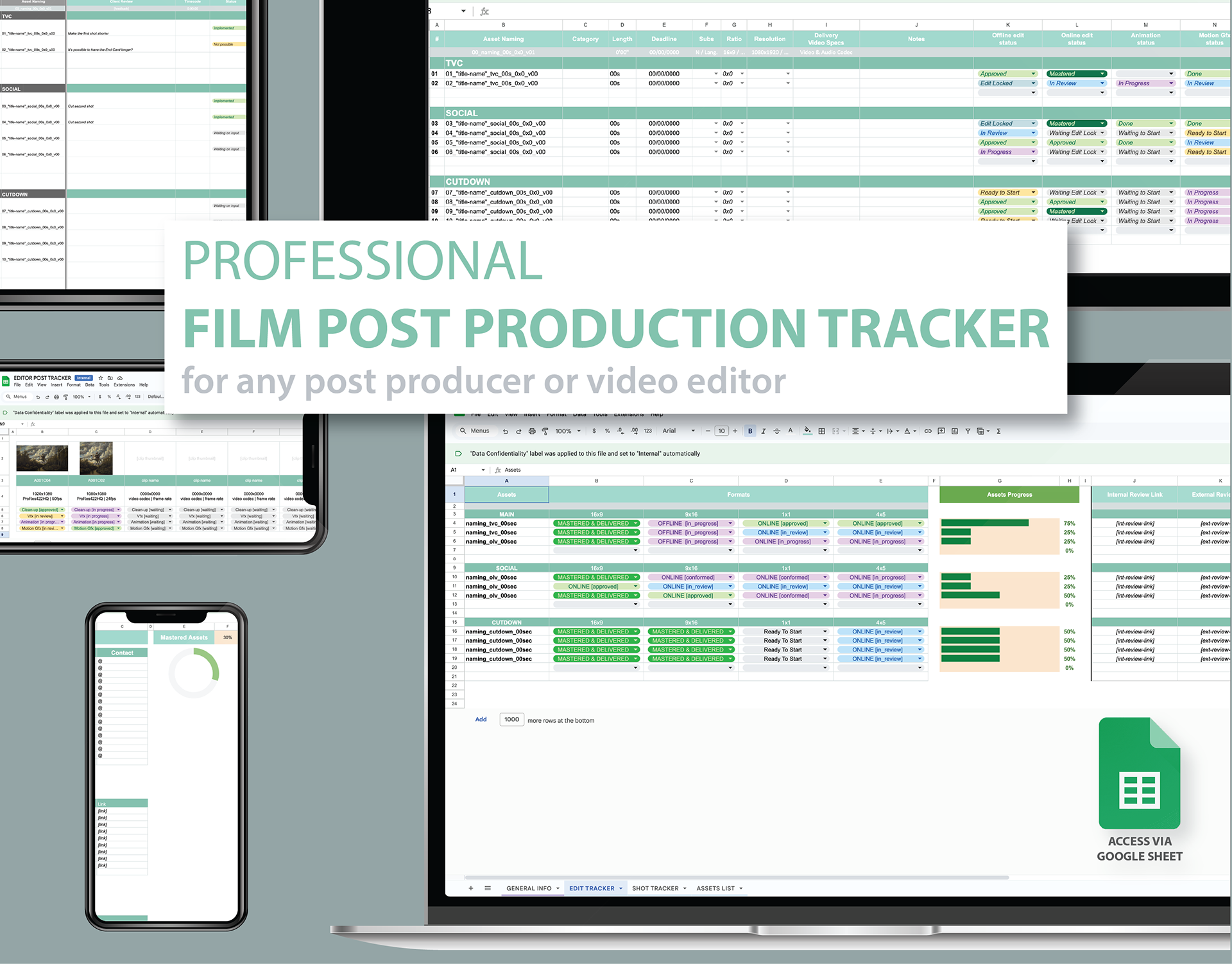
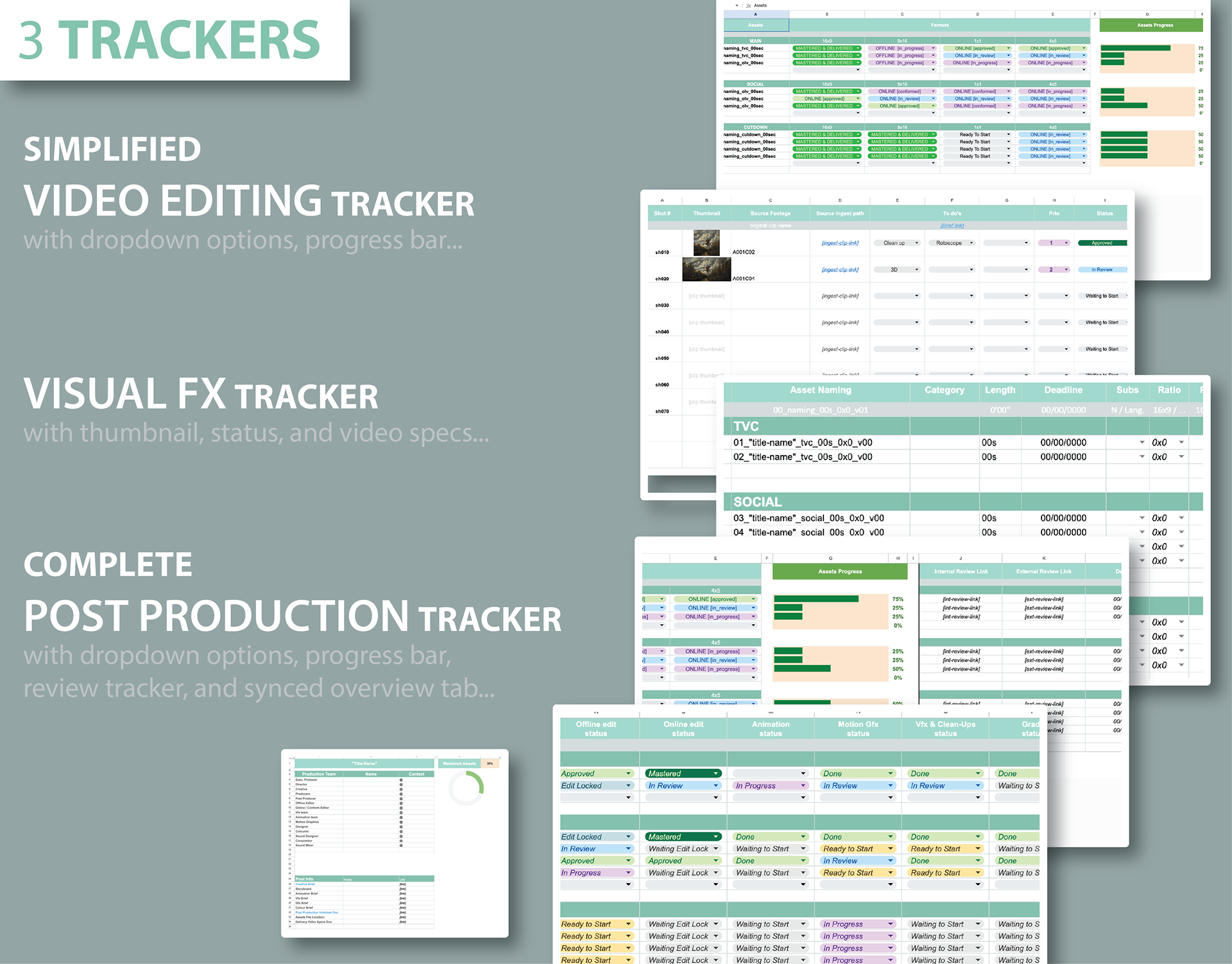
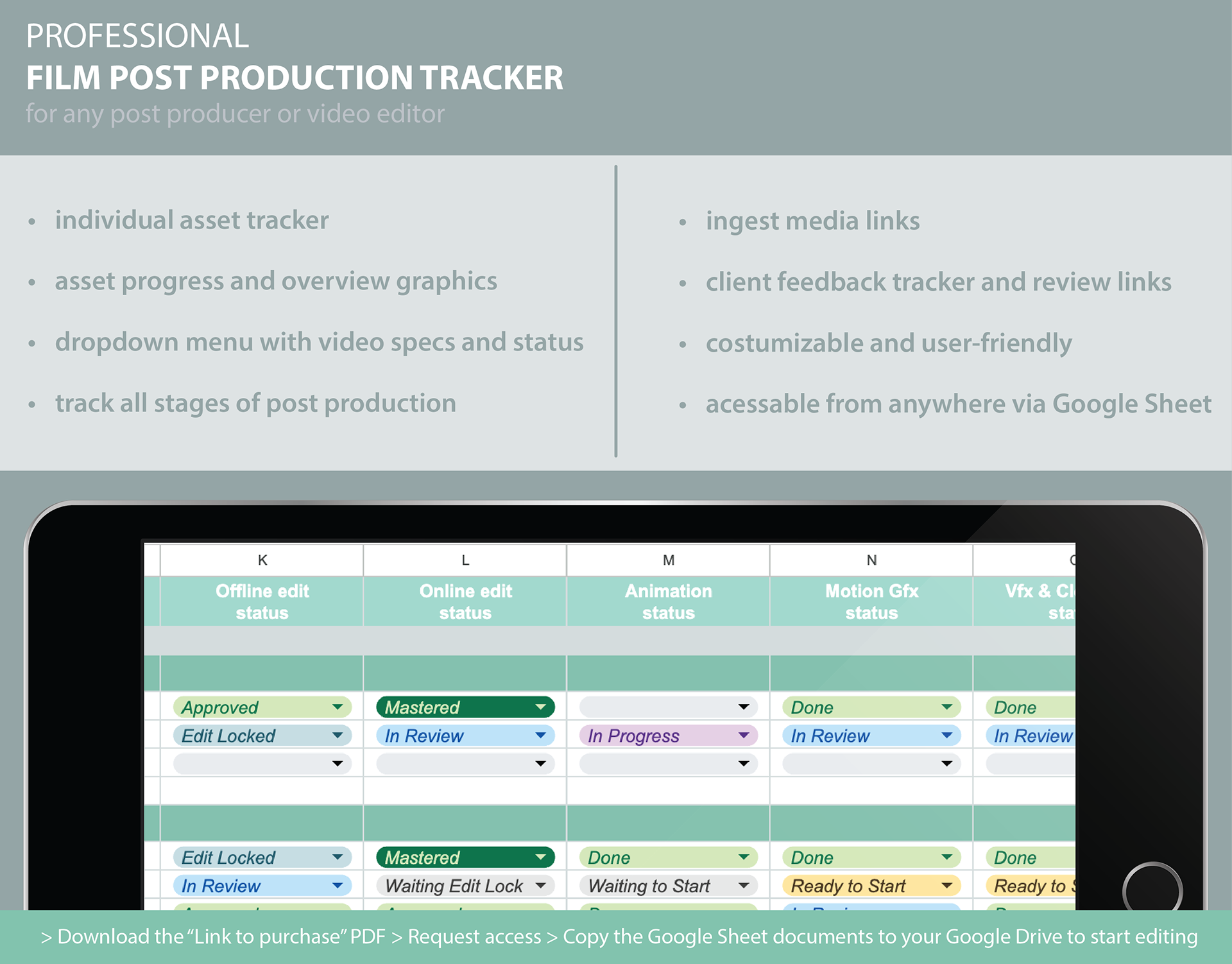
Over the years I’ve developed my own tracking systems that helped manage projects from first assembly through final delivery. They include structured sections for:
• Asset management
• Timeline versions
• Client reviews
• VFX tracking
• Deliverables
• Production notes
• Team responsibilities
• Timeline versions
• Client reviews
• VFX tracking
• Deliverables
• Production notes
• Team responsibilities
Overall project status and important links. They’re designed to reduce administrative overhead so editors and post-producers can focus on making better films rather than searching for information.
Get access to my trackers here: link